
As part of parallel.cymru publishing items from Patagonia, here is this summer’s news from Ysgol y Cwm in Trevelin…
| Mae blwyddyn arall wedi dod i ben yma yn Ysgol y Cwm ac mae gwyliau’r haf wedi cyrraedd! Gyda bron i dri mis o wyliau, bydd cyfle i bawb wneud y mwyaf o’r tywydd braf gydag ymweliad i’r llyn neu i’r campo, i fwynhau asados blasus gyda ffrindiau a theulu. | Another school year has come to an end at Ysgol y Cwm and the summer holidays are well under way! With almost three months of summer holidays there will be ample opportunity to enjoy the fine weather with visits to the lake or the campo, to enjoy a tasty lamb asado with family and friends. |
| Daeth y flwyddyn ysgol i derfyn gyda seremoni arbennig yn Neuadd y Dref ar gyfer graddedigion yr ysgol feithrin a fydd yn symud ymlaen i’w blwyddyn gyntaf yr Ysgol y Gynradd ym mis Mawrth. Fel rhan o’r dathliadau diwedd y flwyddyn, cynhaliwyd diwrnod arbennig gyda chyfle i’r plant ddangos eu doniau a’u talentau. Roedd yr ysgol dan ei sang gyda’r plant a’u teuluoedd, ac roedd yn ddiwrnod i’w gofio -felly llongyfarchiadau calonnog i bawb sy’n gysylltiedig â’r ysgol am flwyddyn wych arall! Ymlaen a 2019! | The school year finished with a special ceremony at the Town Hall for the nursery school graduates who will be starting their first years at Ysgol y Cwm primary school in March. As part of the end-of-year celebrations a special talent day was held, giving the children an opportunity for the children to show off their skills and talents. The school was filled to the brim with the children and their families and it was a day to remember -so a big llongyfarchiadau to everyone associated with the school on another fantastic year! Onwards with 2019! |
| Pob blwyddyn, daw criw o 30 o blant yr Urdd draw i Batagonia am bythefnos, gan dreulio amser draw yn y Dyffryn ac yma yn yr Andes. Daeth y criw i ymweld ag Ysgol y Cwm nol ym mis Hydref, a chafwyd gwledd o ganu a dawnsio, ynghyd a thomen o hwyl a sbri wrth chwarae gemau a chwaraeon. Mae’r profiad o gael criw'r Urdd draw i Ysgol y Cwm wastad yn un gwerth chweil, ac yn gyfle gwych i’r ddau griw gwahanol o blant a phobl ifanc ddysgu mwy am eu gwahanol ddiwylliannau a chefndiroedd. | Every year a group of 30 young people visit Patagonia for two weeks with Urdd Gobaith Cymru, spending time both on the coast and here in the Andes. The group visited Ysgol y Cwm back in October and delighted the children with plenty of singing, dancing, games and sport. They also put on a wonderful concert at the Town Hall. Having the Urdd group come to Ysgol y Cwm is always a worthwhile experience , and a fantastic opportunity for both groups of children and young people to meet and learn about their respective cultures and backgrounds. |
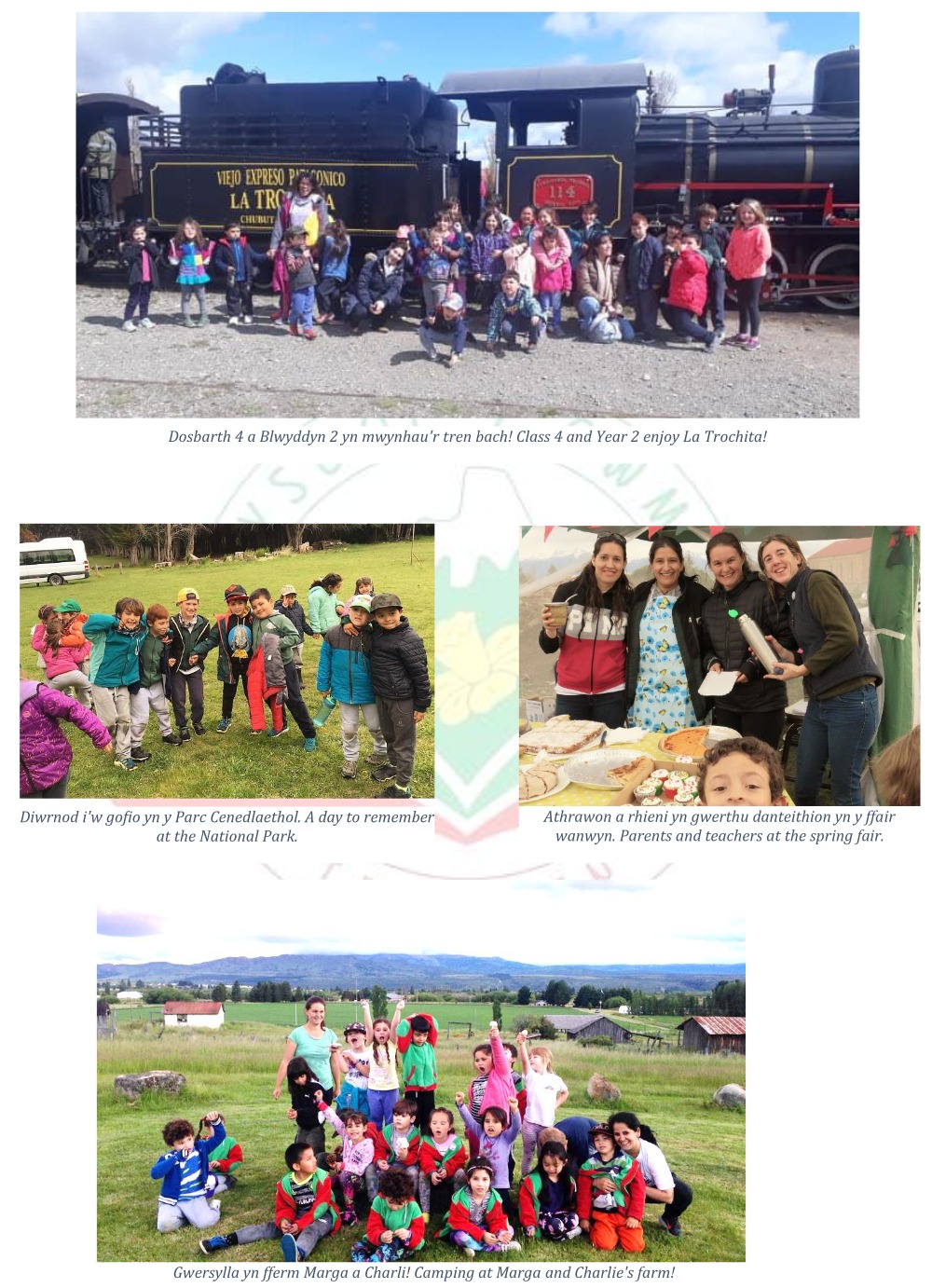
| Gyda thywydd braf tymor yr haf, roedd cyfle i’r plant fwynhau tripiau diwedd y flwyddyn i rai o’r atyniadau lleol. Ym mis Hydref, aeth criw o blant ar y trên bach, La Trochita, o Esquel i bentref brodorol Nahuel Pan, ble mae amgueddfa fechan, ynghyd a stondinau’n gwerthu tortas fritas a choripanes! | The fine weather brought an opportunity for the children to enjoy end-of-year trips to some local attractions. In October, a group visited the La Trochita steam train, which took them from Esquel to the nearby village of Nahuel Pan, where there is a small museum as well as stands selling choripanes and tortas fritas! |
| Ac yn fwy diweddar ym mis Tachwedd ymwelodd blynyddoedd 1 a 2 a Pharc Cenedlaethol Los Alerces, ble cafodd y plant fwynhau picnic a gemau ar lannau Llyn Futalaufquen. Cafodd Blwyddyn 5 hefyd y profiad arbennig o fynd i wersylla yn fferm Margarita a Charli, tra bod Blynyddoedd 1 & 2 wedi mynd i wersylla yn y goedwig ar gyrion y dref! | And more recently in November, Years 1 and 2 visited Los Alerces National Park, where they enjoyed a picnic and games on the shores of Lago Futalaufquen. Year 5 also enjoyed the special experience of camping at Margarita and Charlie's farm, while Years 1 and 2 also went camping in the woods on the outskirts of town! |
| Ar y 23ain o Dachwedd cawsom gyfle i ddalthu Dia del Musica - Diwrnod Cerddoriaeth – gyda chyngerdd arbennig yn Ysgol 37, sydd ar gyrion y dref. Daeth ysgolion y dref i gyd at eu gilydd i fwynhau cyngerdd gan yr athrawon cerdd, gan gynnwys ein athrawes ni, Maria. | On the 23rd of November we celebrated Dia del Musica – Music Day – with a special concert in School 37, on the outskirts of town. All the schoolchildren of the town came together to enjoy a concert led by the local music teachers, including Ysgol y Cwm’s own music teacher, Maria. |
| Hoffai’r ysgol ddiolch i bawb a fynychodd y ffair wanwyn ac y ffair Nadolig eleni. Roedd llu o gynhyrchwyr lleol wedi gosod stondinau yn y ddwy ffair, gyda chynnyrch fel olew olewydd, jamiau a mel ar werthyn cael ei werthu ochr-yn-ochr a thegannau, dillad a phob mathau o nwyddau eraill. | The school would like to thank everyone who took part in both the spring fair and the Christmas fair this year, which were held to raise money for the school. Several local producers and artisans set up their stalls at both fairs, selling everything from olive oil and jams to toys and clothes. |
| Y datblygiad mawr o ran yr adeilad newydd yw bod y wal sy’n gwahanu’r ddwy adran – y dosbarthiadau presennol a’r rhai Newydd - bellach wedi ei ddymchwel. Y camau nesaf fydd gosod y lloriau a’r nenfwd, ac fe fydd yr adeilad newydd yn barod – newyddion cyffrous iawn! Gellir gwylio fideo o’r wal yn cael ei ddymchwel fan hyn. | The big news regarding the ongoing building work is that the partition wall - which separated the current building and the brand-new classrooms and office - has now been demolished. The next steps will be to lay down the flooring tiles and to put the ceiling panels in place, and the new section will be ready – exciting news indeed! A video showing the partition wall being demolished can be viewed here. |
| Gyda diwedd y flwyddyn daeth hi’n amser ffarwelio ag Emyr, a fu’n gweithio yn Ysgol y Cwm fel rhan o’i swydd gyda’r Cyngor Prydeinig. Hwyl fawr i ti Emyr a diolch am bopeth– ‘dyn ni’n edrych ymlaen at dy groesau nol rhywbryd! | The time came at the end of the term to farewell with our friend Emyr, who’d spent a year working at Ysgol y Cwm as part of his job with the British Council. Hasta luego Emyr and thank you for everything – we look forward to welcoming you back to Trevelin sometime! |
| Rydym yn dal i chwilio am athro neu athrawes cynradd o Gymru ar gyfer 2019, felly os ydych chi neu rywun yr ydych yn eu hadnabod awydd her cysylltwch â ysgolycwm@hotmail.com! | We are still looking to recruit a teacher from Wales for 2019, so if you or someone you know would like to apply, email ysgolycwm@hotmail.com for more information. |
| Os hoffech chi ein helpu i gyflogi athro neu athrawes drwy wneud cyfraniad tuag at gronfa’r ysgol, gallwch gysylltu gyda’r cyfeiriad e-bost uchod, neu ymweld â gwefan yr ysgol (www.ysgolycwm.com) am ragor o wybodaeth. | If you would like to help us employ a teacher for the coming year by making a contribution to the school fund, you can do so by contacting the above email address or by visiting our website (www.ysgolycwm.com). |
| Bydd yr ysgol yn agor ei drysau yn barod am flwyddyn arall ym mis Mawrth – yn y cyfamser, Blwyddyn Newydd Dda i chi gyd! | Ysgol y Cwm will re-open for a brand-new school year in March – in the meantime, Happy New Year to you all! |
Rydym yn dal i chwilio am athro neu athrawes cynradd o Gymru ar gyfer 2019, felly os ydych chi neu rywun yr ydych yn eu hadnabod awydd her cysylltwch â ysgolycwm@hotmail.com!
www.ysgolycwm.com / CwmYsgol / YSGOL-Y-CWM-1442021682782063
Mae’r erthygl hon wedi cael eu cyfrannu gan Gwion Elis-Williams o’r Ysgol y Cwm.
This article has been contributed by Gwion Elis-Williams of Ysgol y Cwm.
]]>
As part of parallel.cymru publishing items from Patagonia, here is this spring’s news from Ysgol y Cwm in Trevelin…
| Las Golondrinas llegaron a Cwm Hyfryd de a cientos, los Narcisos y los Tulipanes comenzaron a florecer en los alrededores de Trevelin, si llego la primavera. | Mae’r gwenoliaid wedi cyrraedd Cwm Hyfryd yn eu cannoedd ac mae’r cennin Pedr a’r tiwlipau wedi dechrau blodeuo o gwmpas Trevelin – do, mae ‘r gwanwyn wedi cyrraedd! | The swallows are back in their hundreds in the skies above Cwm Hyfryd and the tulips and daffodils have started to bloom around Trevelin – yes, spring has sprung! |
| El día conmemorativo del desembarco, que se festeja anualmente el 28 de julio que nos recuerda el desembarco de los primeros galeses en el año 1865 hace mucho tiempo ya. Festejamos en la capilla Bethel un día lleno de canto, danza y con la actuación especial de los niños interpretando “Nel Fach y Bwcs” que relata la historia de una niña que navego a la colonia en 1870. | Mae Gŵyl y Glaniad – sy’n cael ei ddathlu’n flynyddol ar yr 28ain o Orffennaf i gofio’r dyddiad pan laniodd y Cymry cyntaf ym Mhorth Madryn yn 1865 - bellach yn teimlo’n hir iawn yn nol. Buom yn dathlu yng Nghapel Bethel gyda llond diwrnod o ganu, dawnsio ac actio, gyda’r plant hyn yn rhoi perfformiad arbennig allan o’r llyfr ‘Nel Fach y Bwcs’, sy’n olrhain hanes merch ifanc a hwyliodd i’r Wladfa yn 1870. Da iawn bawb! | It seems like a long time since we celebrated Gŵyl y Glaniad (the Festival of Landing), the annual celebration when we remember the Welsh pioneers who landed in Porth Madryn on the 28th of July 1865. We celebrated the day in Capel Bethel with lots of singing and dancing, and the older children put on a performance based on the book ‘Nel Fach y Bwcs’, about a young girl who sailed to Patagonia in 1870. A big ‘da iawn’ to everyone involved! |
| En el mes de septiembre festejamos el Dia del Maestro (15/9) y el Dia del Estudiante (21/9), como parte del festejo los niños mostraron sus dones especiales de actuación, con canto, danza, acrobacia, tocar instrumentos, trucos en bicicleta y de vez en cuando un poco de magia.¡ Todos disfrutaron mucho! | Ym mis Medi buom yn dathlu Diwrnod yr Athrawon (Medi 15fed) a Diwrnod y Myfyrwyr (Medi 21ain), ac fel rhan o’r dathliadau cafodd y plant i gyd gyfle i ddangos eu doniau mewn sioe arbennig – gyda chanu, dawnsio, acrobat, sgiliau beic, chwarae offerynnau a hyd yn oed ychydig bach o hud a lledrith! Roedd pawb wedi mwynhau yn fawr iawn. | In September we celebrated both the Day of the Teacher (15th) and the Day of the Student (21st) and as part of the celebrations the children had the opportunity to show off their talents in a talent show - there was singing, dancing, biking skills, playing musical instruments, acrobatics and even a little bit of magic on show! |
| El mes de septiembre es el Mes Nacional de Respeto a la Naturaleza, y algunos alumnos estuvieron ocupados plantando árboles alrededor de Trevelin, y otros visitaron el vivero. Durante el mes los alumnos aprenderán a cuidar el medioambiente – una lección muy importante. | Roedd mis Medi yn Fis Cenedlaethol Parchu Natur, a bu rhai o’r disgyblion yn brysur yn plannu coed a phlanhigion o gwmpas Trevelin, ac eraill yn ymweld â vivero, neu ganolfan arddio. Trwy gydol y mis bu’r plant yn dysgu am warchod a gofalu am yr amgylchedd – gwers bwysig iawn yn wir! | September was also National Respect for Nature and the Environment month, and as part of the month’s activities some of the children got to plant trees and plants around the town centre, whilst other got to visit a vivero (a Spanish word for a plant nursery). Throughout the month the children learnt the importance of caring for nature and the environment – a very important lesson indeed! |
| A los niños de Ysgol y Cwm les encanta mostrar su talento, a principio de este año la escuela fue muy afortunada de recibir una caja llena de instrumentos de todo tipo, de parte de Patagonia Instrument Project, beneficencia galesa que recibe instrumentos musicales y los reparte a los grupos de jóvenes y escuelas en Patagonia. Ysgol Y Cwm agradece a Catrin Finch, a Christopher Stock y a todos los asociados del proyecto. | Mae plant Ysgol y Cwm yn hoff iawn o berfformio, ac yn gynharach eleni roedd yr ysgol yn ddigon ffodus i gael derbyn llond cist o offerynnau o bob math oddi wrth y Patagonia Instrument Project, elusen yng Nghymru sy'n darparu offerynnau cerddorol ar gyfer grwpiau ieuenctid ac ysgolion ym Mhatagonia. Hoffai Ysgol y Cwm ddiolch felly i’n ffrindiau Catrin Finch a Christopher Stock ac i bawb arall sydd ynghlwm a phrosiect yr offerynnau. | The children at Ysgol y Cwm love performing and earlier this year the school was fortunate enough to receive a chest full of all kinds of different instruments, courtesy of The Patagonia Instrument Project, a charity in Wales which provides musical instruments for youth groups and schools in Patagonia. Ysgol y Cwm would therefore like to thank our friends in Wales, Catrin Finch and Christopher Stock, as well as everyone else involved with the instrument project. |
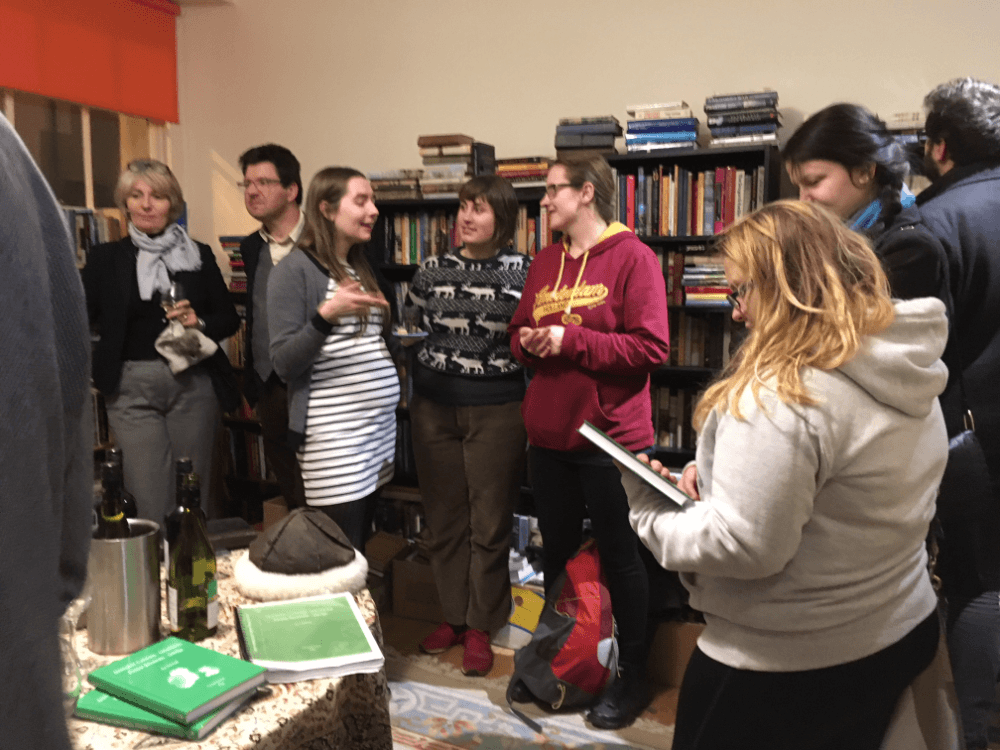
| Otra organización que nos dio su apoyo es Cymdeithas yr Hoelion Wyth, quien estuvo muy comprometida recaudando fondos para la escuela, a través de la venta de vinos Malbec argentino en Gales (Vinos Hijos del Mimosa). Recientemente nos visitó parte de la organización para reforzar la relación e inaugurar la placa que muestra el apoyo a la escuela. Gracias de corazón a la organización Cymdeithas Hoelion Wyth - Trevelin espera darles la bienvenida en un futuro. | Mudiad arall sydd wedi bod yn gefnogol iawn ohonom yma yn Ysgol y Cwm yw Cymdeithas Hoelion Wyth. Mae’r gymdeithas wedi bod yn brysur iawn yn codi arian i’r ysgol drwy werthu gwin Malbec Archentaidd yng Nghymru (Gwin Meibion y Mimosa). Yn ddiweddar iawn bu criw o’r gymdeithas yn ymweld â ni yn ysgol er mwyn atgyfnerthu’r berthynas, ac i ddadorchuddio plac i nodi eu cefnogaeth o’r ysgol. Diolch o galon i Gymdeithas yr Hoelion Wyth – dyn ni’n edrych ymlaen at gael eich croesawu nôl i Drevelin yn y dyfodol. | Another organisation which has been very supportive of Ysgol y Cwm is Cymdeithas yr Hoelion Wyth, who’ve been busy selling Argentine wine (Meibion y Mimosa), with proceeds going towards the school. A group from the association recently visited us here in Trevelin to strengthen the relationship and to unveil a plaque commemorating their support for the school – so a big thank you to all at Cymdeithas yr Hoelion Wyth, we look forward to welcoming you back to the school soon. |
| Nos gustaría también agradecer a los asociados de la Iglesia St. Michael’s de Talyllychau, que estuvieron apoyando a la escuela continuamente desde que uno de sus miembros nos visitó en 2016. | Hoffem hefyd estyn gair o ddiolch i bawb sydd ynghlwm ag Eglwys St. Michael’s yn Nhalyllychau, sydd wedi bod yn cefnogi’r ysgol yn gyson ers i un o’i haelodau ymweld â ni nol yn 2016. Diolch yn fawr iawn! | We would also like to thank everyone at St. Michael’s Church, Talyllychau, which has been supporting the school since 2016, when a member of the congregation visited Ysgol y Cwm. Diolch yn fawr iawn! |
| Ysgol y Cwm espera contratar un profesor/a de primaria del país de Gales para 2019, entonces si usted o uno de ustedes conoce a alguien que quiera un desafío, ¿Por qué no ofrecerle? Hay más en nuestro sitio web, o se puede mandar un correo electrónico a ysgolycwm@hotmail.com. Fecha de cierre - 22.10.18. | Mae Ysgol y Cwm yn gobeithio cyflogi athro neu athrawes cynradd o Gymru ar gyfer 2019, felly os ydych chi neu rywun yr ydych yn eu hadnabod awydd her, beth roi cynnig arni?! Am ragor o wybodaeth cysylltwch â ysgolycwm@hotmail.com. Dyddiad cau – 22.10.2018. | Ysgol y Cwm are hoping to employ a new primary school teacher (male or female) for 2019. If you, or anyone you know, fancies a new challenge, why not give it a go?! More details are available from our website, or by emailing ysgolycwm@hotmail.com. Closing date – 22.10.18. |
| Para permitirnos contratar a un maestro por un año, buscamos a 20 personas de Gales para que donen £25 al mes. Para cada colaborador de Gales, habrá alguien de Trevelin que concuerde con la donación. Habrá una oportunidad para que los pares emparejados se unan y correspondan, fortaleciendo así los vínculos entre Gales y Patagonia. Para obtener más detalles, puede visitar nuestro sitio web www.ysgolycwm.com o enviar un correo electrónico a la dirección anterior. | Er mwyn ein galluogi i gyflogi rhywun, rydym yn chwilio am 20 person o Gymru i roi £25 y mis. Ar gyfer pob cyfrannwr o Gymru, bydd un o Drevelin yn rhoi’r un swm, ac felly bydd 20 pâr o gyfranwyr. Bydd cyfle wedyn i’r parau sydd wedi eu gefeillio gyfathrebu, gan atgyfnerthu’r berthynas rhwng Cymru a’r Wladfa. Am ragor o fanylion, ewch i’n gwefan www.ysgolycwm.com, neu e-bostiwch y cyfeiriad uchod. | To enable us to employ a teacher for a year, we’re looking for 20 people from Wales to donate £25 a month. For each contributor from Wales, there will be someone from Trevelin matching the donation. There will be an opportunity for the matched pairs to liaise and correspond, thereby strengthening the links between Wales and Patagonia. For more details, you can visit our website www.ysgolycwm.com or email the above address. |
| Recuerde que se puede mantenerse al día con las últimas noticias de Ysgol y Cwm a través de nuestras páginas de Facebook y Twitter, así como nuestro sitio web. ¡Hasta el próximo entonces - tan y tro nesaf - chau! | Cofiwch y gallwch ddilyn holl hanes Ysgol y Cwm drwy ein tudalennau Facebook, Twitter a’n gwefan. Tan y tro nesaf felly – chau! | Remember that you can keep up to date with all the latest news from Ysgol y Cwm through our Facebook and Twitter pages, as well as our website. Until next then – chau! |
Er mwyn ein galluogi i gyflogi rhywun, rydym yn chwilio am 20 person o Gymru i roi £25 y mis. Ar gyfer pob cyfrannwr o Gymru, bydd un o Drevelin yn rhoi’r un swm, ac felly bydd 20 pâr o gyfranwyr.

www.ysgolycwm.com / CwmYsgol / YSGOL-Y-CWM-1442021682782063
Mae’r erthygl hon wedi cael eu cyfrannu gan Gwion Elis-Williams o’r Ysgol y Cwm.
This article has been contributed by Gwion Elis-Williams of Ysgol y Cwm.
]]>
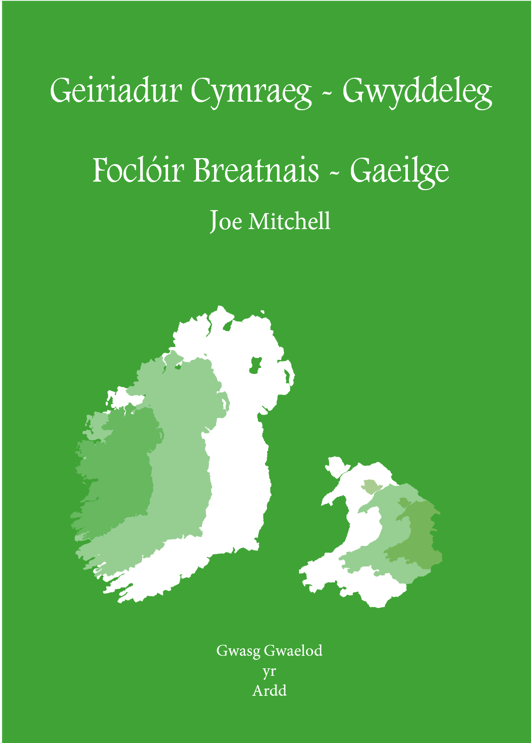
Mae Joe Mitchell wedi dysgu Cymraeg a Gwyddeleg, a thrwy ddymuniad i helpu defnyddiwr a dysgwyr o'r ddwy iaith mae e wedi gweithio am dros 20 mlynedd yn paratoi geiriadur unigryw- Cymraeg i Wyddeleg. Yn eang ei olwg ac yn tynnu ar ffynonellau llafar a llenyddol, y mae’r Geiriadur Cymraeg - Gwyddeleg yn cynnwys 12,500 o eiriau Cymraeg wedi eu trin a myrdd o enghreifftiau defnyddiol, ceir ynddo hefyd adran ramadeg i hwyluso gwell dealltwriaeth siaradwyr ac ysgrifenwyr y naill iaith a’r llall. Yma, mewn erthygl tairieithog unigryw, mae'n esbonio mwy...
Joe Mitchell has learned Welsh and Irish, and through a wish to help other users and learners of both languages he has worked for over 20 years preparing a unique dictionary- Welsh to Irish. The Geiriadur Cymraeg - Gwyddeleg presents a wealth of vocabulary, expression and grammar with a broad scope and wide range of sources, both colloquial and literary. Comprised of over 12,500 headwords with thousands of examples of use, it also contains a grammar section to promote better understanding between speakers and writers of the two languages. Here, in a unique trilingual article, he explains more...
D’fhoghlaim Joe Mitchell an Ghaeilge agus an Bhreatnais agus d’oibrigh sé breis le 20 bliain chun an fhoclóir Breatnais – Gaeilge sainiúil seo a chur le chéile. Le réimse fairsing agus foinsí inmadúla, idir chaighdeánach agus chanúnach, pléann sé le níos mó ná 12,500 ceannfhocal Breatnaise, agus lear mór samplaí den úsáid. Faightear rannóg ghramadaí ann a chuireann ar a gcumas do chainteoirí na dá theanga h sé seo an-úsáideach do chainteoirí agus do scríbhneoirí mar a céanna...
| An Foclóir Ba rud thar a bheith dána dom é ná tabhairt faoi dhá theanga a chur i bhfoclóir dátheangach agus gan ceachtar acu mar chéad teanga agam. Ach is é bun agus barr an fhoghlaim é, glacadh agus scrúdú a dhéanamh ar na botúin chun an teanga a shealbhú go cruinn, agus míniú beacht agus bríomhar mar sprioc. Buíochas le Dia faoin slua ceartóirí agus faoi obair eagarthóireachta Diarmuid Johnson, chomh flaithiúil a chomhairle, agus faoin thriadisiúin foclóireachta sa Bhreatnais agus sa Ghaeilge. Bhí siad go léir ann mar chrann taca. | Y Geiriadur Roedd mynd ati i lunio geiriadur dwyieithog mewn dwy iaith, y naill na’r llall yn famiaith i mi, yn fwriad a oedd yn gofyn am gryn hyfdra. Mae dysgu derbyn a dadansoddi cywiriadau sy’n cael eu cynnig yn rhywbeth creiddiol er mwyn dysgu’n drylwyr ac i anelu at gywirdeb. Diolch byth i’r llu o gywirwyr ac am waith y golygydd Diarmuid Johnson a oedd mor hael ei gyngor, ac am y traddodiad o eiriaduro sydd yn bodoli yn y Gymraeg a’r Wyddeleg. Roedd y rhain i gyd yno i bwyso arnynt. | The Dictionary Setting out to compile a bilingual dictionary in languages neither of which are my mother tongue took quite some cheek. Learning to accept and to analyse corrections that are offered is essential for thorough learning and aiming for accuracy. Thank goodness for the host of correctors, for the work of the Editor Diarmuid Johnson, so generous in his advice, and for the lexicographic traditions that exist in Welsh and Irish. These were all there was to lean on. |
| Cibé daol a bhuail mé, tá sé ar intinn agam sult a bhaint as an dá theanga agus aithne a chur ar a bealaí rúnda. Ba é sin a spreag an triocha bliain seo de chóiriú ar théacs an fhoclóra. Ní raibh foclóir Breatnais – Gaeilge le fáil sna nóchadaí agus é ag teastáil uaim an chéaduair. Tá ga le scríobh agus foilsiú fhoclóirí dátheangacha eile i gcónaí, agus tá súil agam nach mbeidh moill triocha bliain eile sara bhfeicfear foclóir Gaeilge – Breatnais ar an seilf leabhar. Cead faoi foclóir Breatnais – Arabais? Tá sé i bhfad Éireann níos éasca teanga a fhoghlaim agus an foclóir scríofa sna teangacha is fearr le haghaidh na hoibre. | Mae gen i ysfa i fwynhau’r ddwy iaith ac i ymbalfalu yn eu cuddfannau a dyna wnaeth yrru’r deng mlynedd ar hugain o addasu cynnwys y geiriadur. Doedd dim geiriadur Cymraeg – Gwyddeleg ar gael yn y 1990au pan oeddwn ei angen gyntaf. Ar hyn o bryd mae cynhyrchu a chyhoeddi geiriaduron dwyieithog Cymraeg mewn ieithoedd eraill yn fater pwysig. Gobeithio na fydd rhaid aros deng mlynedd ar hugain arall cyn cael geiriadur Gwyddeleg – Cymraeg. Beth am eiriadur Cymraeg – Arabeg? Mae dysgu iaith gymaint yn haws os ydy’r geiriadur yn yr iaith fwyaf addas. | I have a bee in my bonnet for enjoying these languages and searching out their secret places and this is what has driven the score and ten years of selecting and adapting the contents of the dictionary. There was no Welsh – Irish dictionary to be had when I first needed it. At present the production and publication of other bilingual Welsh dictionaries is a pressing issue. I hope it won’t take another 30 years for an Irish – Welsh dictionary to appear. What about a Welsh - Arabic? Learning a language is so much easier if the dictionary is in the most appropriate language. |
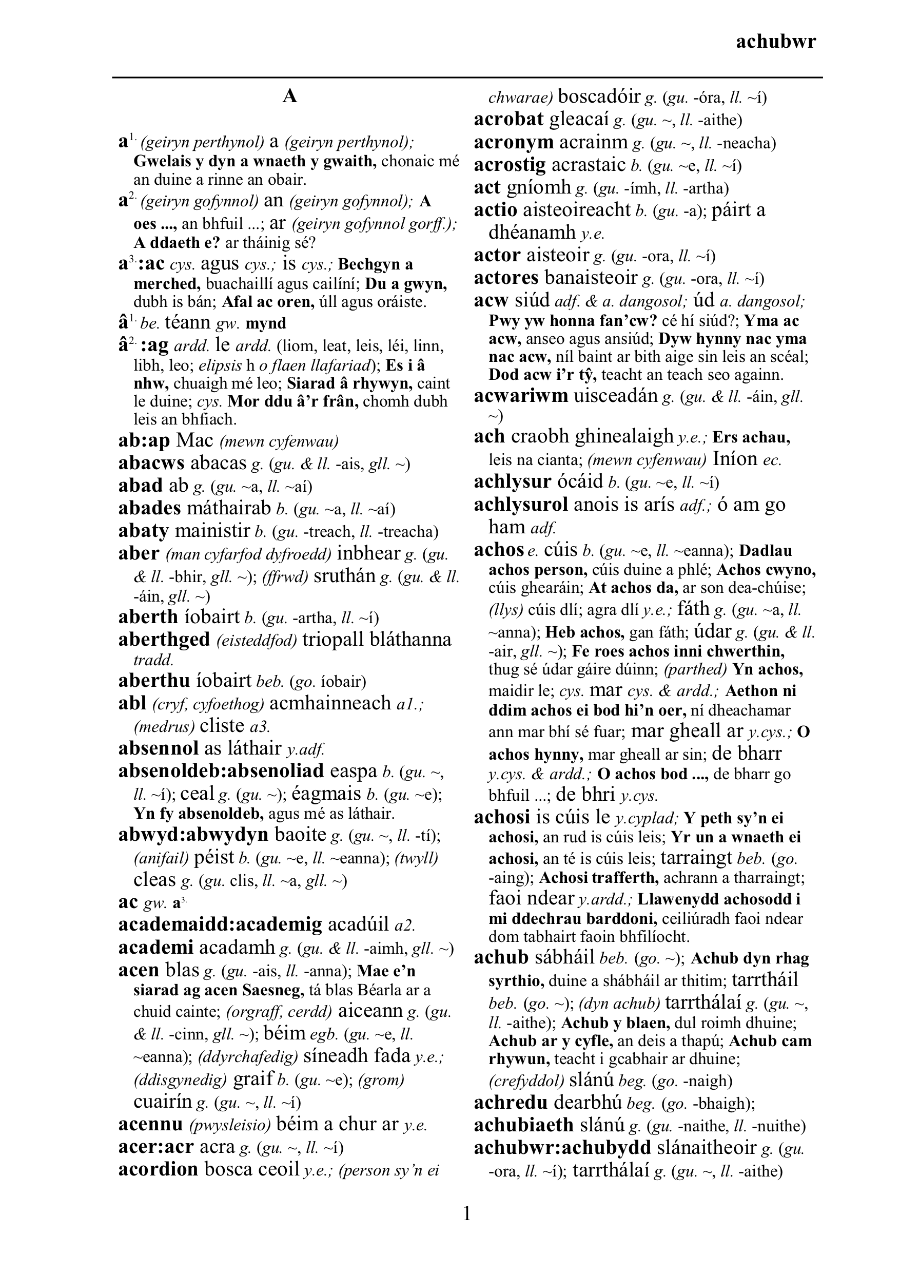
| Tá agusín san fhoclóir agus trácht ann ar na briathra Gaeilge rialta agus neamhrialta, chomh maith le córas a páirteanna rúnda, díochlantaí agus rialacha séimhiú / urú, is ar éigean is fiú iad a lua! Sa réamhrá freisin tá cur síos as Ghaeilge ar séimhiú agus urú na Bhreatnaise. Is áis iontach é teacsleabhar Gaeilge an Dr. Ian Hughes, Dysgu Gwyddeleg, leagan Breatnais ar leabhar Mícheál Ó Siadhail, Learning Irish. Ach san fhoclóir nua, tá cur sios ar 12,500 ceannfhocal Breatnaise ann, agus réimse leathan idir an chaint agus an litríocht. | Ceir gramadeg yn atodiad fy ngeiriadur i ddangos y berfau Gwyddeleg rheolaidd ac afreolaidd, ffurfdroadau ei rhannau cudd a’i rheolau treiglo bondigrybwyll! Mae gwerslyfr dysgu Gwyddeleg Ian Hughes, Dysgu Gwyddeleg, cyfieithiad o werslyfr Mícheál Ó Siadhail, Learning Irish yn cynnwys geirfa Cymraeg – Gwyddeleg. Ond mae’r geiriadur newydd yn llawer mwy ac yn fwy eang ei gwmpas gyda 12,500 o eiriau Cymraeg yn cael eu trin. | The appendix to my dictionary has a grammar showing the regular and irregular Irish verbs, declensions of its secret parts and the barely mentionable rules of mutation! There is an Irish learners’ textbook by Ian Hughes, Dysgu Gwyddeleg, a translation of Mícheál Ó Siadhail’s Learning Irish which includes a Welsh – Irish vocabulary. The new dictionary though is much bigger and more comprehensive with 12,500 Welsh headwords dealt with. |
| Abererch, Caerdydd agus Aberystwyth Sna chéad ranganna Gaeilge a bhí mé páirteach ann i 1989, bhí na Breatnaigh thar a bheith sásta leis an gcaoi ar tharraing ár múinteior Barra Tóibín aird na ranga ar ghnéithe coiteanta idir an dhá theanga: struchtúir na habairte, agus an briathar ag freagairt na cheiste; foclóir gaolmhar idir Chlaiseacach agus Cheilteach; míreanna na hainmbriathra ag freagairt dá chéile, -io as Breatnais agus -áil as an Ghaeilge. Thairis sin bhíodh ciorcal léamh maidin Sathairn á réachtáil aige, cruinnithe ceoil agus comhrá mar a bheifí in ann úsáid a bhaint as an teanga. Níor dhiúltaigh sé éinne, agus bhí na foghlaimeoirí in ann misneach a bhaint as: spreag sé sinn chun pinn, chun astriú agus chun foilsiú agus d’inis sé stair na nGael i Gaerdydd duinn. | Abererch, Caerdydd ac Aberystwyth Yn y gwersi Gwyddeleg cyntaf i mi fynd iddyn nhw yng Nghaerdydd yn 1989 roedd Cymry’r dosbarth yn gwirioni ar allu’r tiwtor, Barry Tobin i dynnu sylw at y tebygrwydd rhwng y ddwy iaith: strwythur cyfarwydd y frawddeg gyda berf yn ateb cwestiwn; geiriau Clasurol a Cheltaidd cyffredin, ac ôl-ddodiaid y berfenwau -áil a -io yn cyfateb. Ond trefnai Barry foreau darllen, cyfarfodydd sgwrsio a sesiynau canu lle caed cyfle i ddefnyddio’r iaith. Dyna athro a wyddai’r ffordd i gymell dysgu a chyfathrebu: anogodd ni i gyhoeddi ac ymarfer cyfieithu a chododd ymwybyddiaeth o hanes y Gwyddelod yng Nghaerdydd. | Abererch, Cardiff and Aberystwyth The Welsh contingent in the first Irish classes I attended in Cardiff in 1989 feasted on Barry Tobin’s tutoring as he pointed out the common core between the two languages: familiar sentence structure with verb answering questions; common Classical and Celtic vocabulary, verb noun endings -io and -áil corresponding. But Barry would organise reading mornings, chat sessions and singalongs you could get the opportunity to use the language. He was a tutor who knew how to inspire learning and communication: he encouraged us to publish and translate and he created interest in the history of the Irish in Cardiff. |
| Agus ba stair í a bhain le chuid dom shinsear féin. Fuair mo athair a chuid teagaisc ó scoil na mBráthar Chríostaí sa chathair sna triochadí, agus tháinig mo shin-seanmháthair ó Chorcaigh i mbád oscailte ina leanbhín óg de shliocht teifieach aimsir na Górta Mór. Bhraitheas go raibh mé in ann an stair a thuiscint agus an teanga a shealbhú de réir mar a bhí na focail agus na frásaí á bhailliú agam taobh le chéile i gcomhair an fhoclóra. | A hanes rhai o’m cyndeidiau oedd hyn, gyda fy nhad wedi bod trwy ddwylo’r Brodyr Dysgu yn y ddinas yn yr 1930au a fy hen-nain wedi dod draw o Gorcaigh mewn cwch agored yn fabi bach i ffoaduriaid o’r Newyn Mawr. Teimlais ryw berchnogaeth a pherthyn i’r ieithoedd wrth gasglu geiriau ac ymadroddion ochr yn ochr ar gyfer y geiriadur. | And this was the history of some of my ancestors, my father having been through the hands of the Teaching Brothers in the 1930s and my great-grandmother having came across from Cork as a baby in an open boat with refugees from the Great Hunger. I feel an ownership and a belonging in these two languages from having compiled these words and phrases side by side in the dictionary. |
| Ach ní amháin ar fhoclóir dátheangach nach bhfuil mórán clú air a mhairfidh an duine. Bhí an mhúinteoireacht i ndán dom, agus rinne mé gach iarracht sna scoileanna feabhas a chur ar an Bhreatnais a d’fhoghlaim mé den chéad uair sa naoiscoil in Abererch Pwllheli. Bhuail mé le mo bhean, Breatnach ó Bow Street nuair a bhíomar inár n-ábhar múinteórí sa Sean Choláiste in Aberystwyth i 1990 agus is í mo eagarthóir neamhoifigiúil go fóill. Bhí mo Bhreatnais labhartha beagáinín ró liteartha i dtús na nóchadaí, ach le himeacht aimsire d’éirigh mé cleachtadh uirthi féin agus a ceartú agus a gléasanna! | Ond nid ar eiriadur dwyieithog prin ei apêl y bydd dyn byw. Mynd i ddysgu oedd fy ffawd a bachais bob cyfle yn yr ysgolion y bûm i’n gweithio ynddynt i fireinio’r Gymraeg roeddwn wedi’i dysgu gyntaf yn Ysgol Feithrin Abererch Pwllheli. Pan oeddwn yn gyw athro yn 1991 ffeindiais fy mhriod yn yr Hen Goleg. Cymraes o Bow Street ydy hi a’m golygydd answyddogol o hyd. Tamaid bach yn rhy lenyddol oedd fy Nghymraeg i yn ôl yn y 90au, ond o dipyn i beth deuthum yn fwy cyfarwydd â hi a’i chywiriadau a’i chyweiriau! | But man cannot live on a niche appeal dictionary alone. Fated to be a teacher I seized every opportunity to perfect the Welsh I had first learned at Infant School in Abererch, Pwllheli. While doing teaching practice in 1991 I found my wife at the Old College. She has Welsh as her first language and she is still my unofficial editor. In the 90s my Welsh was a rather literary but I gradually got familiar with her corrections and registers! |
| Tá buntáistí ag baint le Aberystwyth mar áit chun an fhoclóir a fhorbairt: leabhair go leor san Ollscoil, múinteóirí ag múineadh cursa MA i nGaeilge, scata de chainteóirí sásta an teanga a úsáid, agus aer úr chun stuaim a choimeáid ar an fhoighid, mar a ritheann an gaineamh san orláiste arís agus arís eile agus an caisleán digiteach ag éirí inár dtimpeall. Faoi seo tá Russel Foley, mac léinn i Roinn na dTeangach in Ollscoil Aberystwyth, ag tabhairt faoin fhoclóir a chur in oiriúint le haghaidh an tIdirlíon. | Roedd datblygu’r gwaith yn Aberystwyth yn dod â sawl mantais: llond y brifysgol o lyfrau ac athrawon i ddysgu cwrs MA Gwyddeleg i mi, nifer o siaradwyr parod i ddefnyddio’r ieithoedd, ac awyr iach i borthi’r amynedd sydd eisiau tra bod tywod amser yn llithro drwy’r gwydr drosodd a thro a thra codwyd y castell digidol o’n cwmpas. | Developing the work in Aberystwyth had its advantages: a university full of books and teachers to teach me an MA in Irish, lots of speakers willing to use the languages, and the sea air to feed the endless patience needed while sand slipped over and over again through the hourglass and while the digital castle was built around us. |
| Buntáiste? Cad mar bhuntáiste? Tá tionachar na foclóirí Geraint Lewis agus Niall Ó Dónaill le feiceáil ar leagan amach na hoibre nua, ach tá samplaí úr nua ann chomh maith. Is é sin an rud atá nua amach is amach san obair seo, go féidir leat bogadh caol díreach idir an Bhreatnais agus an Ghaeilge gan a bheith ceangailte leis an Bhearla a úsáid mar dhroichead. | Mantais? Pa fantais? Mae’r geiriadur Cymraeg - Gwyddeleg yn dilyn patrymau a welir yng ngeiriaduron D. Geraint Lewis ac Ó Dónaill ac yn ogystal â hynny mae ynddo fyrdd o gyfuniadau gwreiddiol sy’n tynnu ar gasgliadau helaeth y geiriadurwyr Gwyddeleg a Chymraeg proffesiynol ac ar lafar a thestun y siaradwyr ac ysgrifenwyr cyfoes. Beth sydd wir yn dir newydd yn y gwaith hwn yw’r hwylusdod o fedru cyfeirio’n uniogyrchol at eiriadur Cymraeg - Gwyddeleg heb orfod pontio drwy Saesneg. | Advantage? What advantage? The layout of the Welsh - Irish dictionary borrows from the dictionaries of D. Geraint Lewis and Ó Dónaill and in addition to these there are countless original examples drawn from the extensive collections of Irish and Welsh professional lexicographers and from the speech and texts of contemporary speakers and writers. What is essentially new in the dictionary is the facility of being able to refer directly to a Welsh – Irish dictionary without the need to use English as a bridge. |
| Is trua nach bhfuil bogearraí aistriúchán agus láithreáin gréasáin is féidir braith orthu go hiomlán, mar geall ar an teanga lochtach nó na botúin a tharlaíonn sna haistriúcháin sin go minic, ach tá an ríomhaistriúchán ag feabhasú agus bíonn frásaí úsáideach le chomhréir le fáil ar líne. Tá áis thar barr, saor in aisce ar fáil ar líne. Is é lexicelt.org é, cúrsa Breatnaise trí mheán na Gailge agus cúrsa an Gaeilge trí mheán na Breatnaise, le ceachtanna agus samplaí fuaime. | Yn anffodus ni fedrwn ddibynnu gymaint â liciwn ar y safleoedd cyfieithu a’r gwefannau dysgu iaith gan fod nhw’n cynnig cyfieithiadau anghywir ac anaddas ar brydiau, ond mae cyfieithu digidol yn gwella ac mae ymadroddion defnyddiol mewn cyd-destun i’w cael ar lein. Mae adnodd ar lein rhagorol i ddysgu Gwyddeleg drwy’r Gymraeg a Chymraeg trwy’r Wyddeleg yn lexicelt.org, gwefan sydd yn cynnwys cwrs dysgu â samplau sain. | Unfortunately we cannot depend as much as we would like on computer translation and language-learning websites since they offer inaccurate and inappropriate translations at times, though digital translation is improving and there are useful in context phrases to be found on line. There is an excellent web resource for learning Irish through Welsh, and Welsh through Irish in lexicelt.org, a site with a learners’ course which includes audio samples. |
| Taca Bhí mo bhean ag dul as a meabhair leis an fhuaim as an chlóscríobhán sna nóchadaí luath. Ansin bhí an t-ádh liom i 1995 gur smaoinigh Dr Willy Mahon ar seift chliste. Thug dáréag tacaí deich bunt an duine síos chun cóip den fhoclóir a fháil saor in aisce tráth a thiocfadh sé amach, agus caitheadh an t-airgead ar ríomhaire chun próiseáil a dhéanamh ar na focail. Chodail an bhean níos fearr fós nuair a thug Cumann na Múinteóirí Breatnaise leath chead punt don togradh. D’íoc Iontaobhas Pantyfedwen as costas mo cursa céim mháistreachta sa Ghaeilge. Míle buíochas do ghach uile cheann acu. | Nawdd Roedd sŵn clecian fy nheipiadur yn y nawdegau cynnar yn gyrru’r wraig o’i cho’. Yna yn 1995 roeddwn i’n ffodus fod Dr Willy Mahon wedi meddwl am ateb. Rhoddodd dwsin o gefnogwyr ddeg punt yr un i gael copi o’r geiriadur yn rhad ac am ddim ar ôl iddo ddod allan, ac aeth yr arian at brynu cyfrifiadur i brosesu’r geiriau. Cysgodd y wraig hyd yn oed yn well ar ôl i UCAC roi £50 at yr achos. Talodd Ymddiriedolaeth Pantyfedwen ffioedd fy nghwrs MA Gwyddeleg. Can diolch i bob un. | Sponsorship The sound of my typing in the early nineties was driving my wife up the wall. Then fortunately in 1995 Dr Willy Mahon thought of a solution. A dozen people donated ten pounds each for free copy of the dictionary when it appeared, and the money went towards buying a computer for word processing. The wife slept even better when the teacher’s Union UCAC donated £50 to the cause. Pantyfedwen Trust paid my fees for my MA course in Irish. Thanks a million to all. |
| Bhí costas ag baint leis an eagarthóireacht, roinnt cácaí milise agus cúpla céad punt. Ach ba í flaithiúlacht, saothair deonach agus staidéir an Dr Diarmuid Johnson ba chionsiocair leis an obair a chur i gcríoch. | Roedd y gwaith golygu wedi costio sawl cacen ffrwythau a chant neu ddau o bunnoedd. Ond haelioni, llafur cariad a dyfalbarhad Dr Diarmuid Johnson oedd wedi mynd â’r maen i’r wal. | Editing the work cost a number of fruitcakes and a few hundred pounds. But it was the generosity, labour of love and fortitude of Dr Diarmuid Johnson as that secured the success of the work. |
| Tar éis dom an obair ghrafaidh a dhéanamh agus téacs an fhóclóra a leagan amach le haghaidh Preas Gomer, chuaigh Ystwyth Books">Siopa Leabhair Ystwyth agus mé féin i bhfiontar ar na costais phriontála. Seoladh an leabhar i bhialann Medinas in Aberystwyth, agus rinneadh beart de réir an bhriathair. Tháinig mé amach as an chéiliúradh yn blasu’r melysder yn y gwynt. Ag blaiseadh na milseachta ar an ghaoth. | Ar ôl i mi wneud y graffeg a gosod testun y geiriadur ar gyfer y wasg, mentrodd Ystwyth Books">Siop Lyfrau Ystwyth a minnau dalu am agraffu gyda Gomer. Lawnsiwyd y llyfr yn nhŷ bwyta Medinas yn Aberystwyth a gwireddwyd y gair. Deuthum allan o’r dathlu, ag blaiseadh na milseachta ar an ghaoth: Yn blasu’r melysder ar y gwynt. | After I’d done the graphics and and prepared the text of the dictionary for Gomer Press, Ystwyth Books shared with me the printing costs. The book was launched in Medinas restaurant in Aberystwyth and the words became a reality. I came out of the party, ag blaiseadh na milseachta ar an aer: Tasting the sweetness in the wind. |
Roedd datblygu’r gwaith yn Aberystwyth yn dod â sawl mantais: llond y brifysgol o lyfrau ac athrawon i ddysgu cwrs MA Gwyddeleg i mi, nifer o siaradwyr parod i ddefnyddio’r ieithoedd.
|
|

Y Geiriadur
Y mae’r drefn hwylus sydd i’r dewis geiriau, y nodiadau a’r ymadroddion yn galluogi’r darllenydd i weld ystyr a chyd-destun yn rhwydd. Dyma’r casgliad mwyaf cynhwysfawr o’i fath mewn print. Caiff groeso cynnes yn y prifysgolion ac ar aelwydydd pob un sydd am agor drysau ar y naill ochr a’r llall o Fôr Iwerddon a thu hwnt. Mynnwch gopi. Mae’r gyfrol yn elwa’n arbennig o olygyddiaeth ymgynghorol Dr. Diarmuid Johnson - Y Gwyddel o Geredigion.
Comprehensive in its recording modern vocabulary and expression, it stands on the shouders of the Irish and Welsh scholars as a unique work of word and phrase in context, compiled clearly and well annotated. It will surely be welcomed by students from both sides of the Irish sea and beyond. Editorial accuracy was provided by the consultative editor Dr. Diarmuid Johnson, Y Gwyddel o Geredigion.
Joe Mitchell
Yn enedigol o Gaerfyrddin, wedi’i fagu yn Abererch a Gogledd Caerdydd, dysgodd Joe Mitchell yr Wyddeleg gyntaf yng Nghaerdydd gyda Barry Tobin. Enillodd radd MA mewn Gwyddeleg yn Aberystwyth gyda’r Athro Patrick Sims-Williams, Dr. Willy Mahon, Dr. Diarmuid Johnson a Dr. Ian Hughes. Y mae ei waith cyfieithu yn cynnwys straeon byrion a thraethodau Martín Ó Cadhain. Y mae’r geiriadur hwn yn ffrwyth llafur dros 30 o flynyddoedd o gasglu a chofnodi. Bydd y gyfrol o ddefnydd mawr i ddysgwyr a defnyddwyr y ddwy iaith.
Born in Carmarthen and raised in Abererch and North Cardiff, Joe Mitchell first learned Irish in Cardiff with Barry Tobin. He graduated with an MA in Irish at Aberystwyth University in 2005 under Prof. Sims-Williams, Dr. Will Mahon, Dr. Diarmuid Johnson and Dr. Ian Hughes. His translations of Irish texts include short stories and essays by Martín Ó Cadhain. This publication represents the fruit of 30 years of learning Irish: a comprehensive Welsh - Irish dictionary which will promote the study and use of both languages.
geiriadurgwyddeleg.com
Erthygl ar gael i lawrlwytho ar Apple Books, PDF & Kindle / Article available to download on Apple Books, PDF & Kindle:


As part of parallel.cymru publishing items from Patagonia, here is this summer’s news from Ysgol y Cwm in Trevelin, including building work, the Trevelin eisteddfod and a new arrival…
| Las vacaciones de invierno llegaron después de otra temporada ocupada en Ysgol Y Cwm, con dos semanas de vacaciones para recargar las pilas y relajarse con un poco de sky y cabalgatas en las lomas de los alrededores de Cwm Hyfryd. | Mae gwyliau’r gaeaf wedi cyrraedd ar ôl tymor prysur arall yn Ysgol y Cwm, gyda phythefnos o wyliau i ymadfer ac ymlacio gydag ychydig o sgïo neu farchogaeth yn y bryniau o’n cwmpas ni fan hyn yng Nghwm Hyfryd. | The winter holidays are upon us after another busy term at Ysgol y Cwm, bringing with them a chance to recharge the batteries, perhaps with a little skiing or horse riding in the snowy hills around Cwm Hyfryd! |
| Celebramos el Eisteddfod de Trevelin nuevamente en abril en la escuela de los Rifleros, y fue muy exitoso para Ysgol Y Cwm. Los niños compitieron en varias categorías, como por ejemplo: solistas en canto, canto coral, dúos, recitaciones, bandas de música, danza tradicional galesa, así como dibujo, pintura, diseño, no hay suficiente lugar para los certificados! | Cynhaliwyd eisteddfod Trevelin eleni nôl ym mis Ebrill yn Ysgol y Rifleros, ac roedd o’n un llwyddiannus dros ben i Ysgol y Cwm. Bu’r plant yn cystadlu mewn sawl categori, gan gynnwys canu unigol, canu mewn côr, parti deulais, adrodd, grŵp offerynnol a dawnsio gwerin, ynghyd a dylunio, paentio, arlunio a llenyddiaeth – mae prin digon o le i arddangos yr holl dystysgrifau! | The Trevelin eisteddfod was held back in April in the Rifleros’ School, and it was a particularly successful one for Ysgol y Cwm. The children competed in several categories, including singing solo, in a duet and in a choir, reciting poetry, instrumental groups, folk dancing, as well as drawing, painting and literature. There is hardly enough space on the classroom walls to display all the certificates! |
| Todos los años el 29 de abril celebramos el día del animal en Argentina. Este año vino un amiguito peludo a saludarnos en la escuela – Pepito el perro, vino con su dueño, María la veterinaria, para enseñarles a los chicos como deberían cuidar a sus mascotas. | Bob blwyddyn, ar y 29ain o Ebrill, rydym yn dathlu Diwrnod yr Anifail yn yr Ariannin. Eleni, daeth ymwelydd bach blewog i ddweud helo wrthym yma yn yr Ysgol – Pepito y ci, a ddaeth gyda’i berchennog, Maria y milfeddyg, i ddysgu’r disgyblion am sut i ofalu am anifeiliaid anwes. | Each year, on the 29th of April, Argentina celebrates its Day of the Animal. This year, Ysgol y Cwm welcomed a very special and very furry little visitor – Pepito the dog, who came along to teach us a little about taking care of our pets, along with his owner, Maria the vet. |
| También festejamos otras fechas importantes para la historia argentina durante el otoño, por ejemplo, la Revolución de Mayo, cuando Argentina comenzó su viaje a la independencia en 1810, también el Dia de la Independencia el 9 de julio, también el Dia de la Bandera 20 de julio recordando a Manuel Belgrano, su creador. Para los que participan en las fechas, dichos eventos son inolvidables. Fue muy divertido con actuaciones de danzas y cantos. | Buon ni hefyd yn dathlu llu o ddiwrnodau pwysig eraill yn hanes yr Ariannin yn ystod tymor yr hydref, gan gynnwys Diwrnod Chwyldro Mai (25ain o Fai) pan gychwynnodd yr Ariannin ar ei thaith tuag at annibyniaeth yn 1810, a Diwrnod Annibyniaeth (9fed o Orffennaf), pan gyhoeddwyd annibyniaeth o Sbaen yn 1816. Buon ni hefyd yn dathlu Diwrnod y Faner ar yr 20fed o Fehefin, i gofio am greawdwr y faner, Manuel Belgrano. Mae’r achlysuron hyn wastad yn ddiwrnodau i’w cofio ac eleni cawsom hwyl anferthol gyda pherfformiadau a llawer o ganu a dawnsio! | We also celebrated several other important days in Argentina’s history during the autumn, including May Revolution (25th of May), when Argentina began its path to independence in 1810; Independence Day (9th of July), when Argentina declared itself independent from Spain in 1816; and Flag Day (20th of June) in memory of Manuel Belgrano, creator of the Argentine flag. These events are always fun and memorable occasions at Ysgol y Cwm, with lots of singing, dancing and performances by the staff and the children! |
| Por supuesto que lo especial de la escuela es que los niños también aprenden de la cultura y tradiciones galesas, además de las argentinas. Disfrutaron de la triste historia de la Princesa Gwenllïan, la fecha cuando se recuerda a esta princesa es el 12 junio. Las maestras hicieron una gran actuación y los niños se vistieron con trajes de la época. | Wrth gwrs, beth sydd yn arbennig am Ysgol y Cwm yw bod y plant i gyd yn cael dysgu am holl hanes, draddodiadau ac arferion Cymru, yn ogystal â rhai’r Ariannin. Roedd y plant wedi ymgolli’n llwyr yn stori’r dywysoges Gwenllïan ar Ddiwrnod Gwenllïan ar y 12fed o Fehefin. Roedd yr athrawon wedi rhoi perfformiad bendigedig, a’r plant i gyd wedi gwisgo mewn dillad o’r cyfnod! | Of course, what makes Ysgol y Cwm so special is that the children get to learn all about Wales’ history and traditions, as well as those of Argentina. The children were captivated by the story of Princess Gwenllian when we celebrated Diwrnod Gwenllian on the 12th of June – the teachers put on a show to remember, and the children all came dressed in medieval costumes! |
| Luego de escuchar el mensaje de paz del Urdd en mayo, Ysgol Y Cwm tuvo la idea de filmar su propio mensaje de paz. Este video, y otros acompañados de algunas fotos se podrán encontrar en la página principal de Ysgol Y Cwm. | Yn dilyn Neges Heddwch yr Urdd eleni, a gyhoeddwyd nôl ym mis Mai, fe ffilmiodd y disgyblion eu neges fach eu hunain – mae’r fideo, ynghyd a llawer o fideos a lluniau eraill o’r disgyblion – i’w weld ar dudalen Facebook yr ysgol. | Following the Urdd’s Neges Heddwch (Message of Peace) broadcast back in May of this year, the pupils put together their own little video message – this, along with several other short videos and photos – can be viewed on our Facebook page. |
| A la escuela le gustaría dar las gracias a todos aquellos y aquellas que colaboraron, con la recaudación de dinero para la afinación del piano, especialmente a Dwyryd Williams, Susan Alison Adams, John y Ireen Evans, que han estado muy ocupados en juntar dinero haciendo eventos y/o actividades a beneficio. El piano esta como nuevo y lo usamos todos los días. | Hoffai’r ysgol ddiolch i bawb a gyfrannodd at gronfa piano’r Ysgol, yn enwedig Dwyryd Williams, Susan Alison Adams a John ac Ireen Evans, sydd wedi bod yn weithgar iawn yn casglu arian i’r gronfa gyda gwahanol achlysuron a gweithgareddau. Mae’r piano nawr fel newydd, ac yn cael ei ddefnyddio’n ddyddiol! | The school would like to thank all of those involved with raising money for the school piano fund, especially Dwyryd Williams, Susan Alison Adams and John and Ireen Evans, who have been busy organising events and activities for the benefit of the school. The piano is now up and running, is as good as new and is played on a daily basis! |
| Las construcciones van muy lentas por el frio del invierno, el techo fue colocado en la parte nueva de la escuela y la escuela parece gigante, las ventanas también fueron colocadas, en un futuro cercano se logrará empezar a terminar de construir las aulas. Además de las construcciones de la parte nueva de la escuela, ya fueron colocados los baños y duchas de la parte presente. El trabajo que llevamos a cabo depende del dinero de las donaciones de nuestros amigos en gales; por ello les damos las gracias desde nuestros corazones para todos los que contactaron y contribuyeron con esta causa. Si usted desea ayudar con nuestra escuela, los detalles podrá encontrarlos en la web (http://ysgolycwm.com/rhoi---donar---donate.html). | Er bod y gwaith adeiladau wedi arafu ychydig dros y gaeaf, mae’r to bellach wedi cael ei osod ar yr adeilad newydd, ac mae’r ysgol yn edrych yn anferth! Mae’r ffenestri hefyd wedi eu gosod, a chyn hir bydd y gwaith yn cychwyn ar gwblhau’r dosbarthiadau. Yn ogystal â’r adeilad newydd, mae toiledau a chawodydd wedi cael eu gosod yn yr ysgol bresennol. Mae’r gwaith adeiladu yma’n ddibynnol ar godi arian, ac mae rhoddion gan ein cyfeillion o Gymru yn hanfodol – felly diolch o galon unwaith yn rhagor i bawb sydd wedi cysylltu a chyfrannu. Os hoffech chi ein cynorthwyo, ceir manylion ar sut i wneud ar ein gwefan (http://ysgolycwm.com/rhoi---donar---donate.html). | Though the building work on the school has slowed a little over the winter months, a roof has now been placed on the new building and the school looks enormous! The windows have also been put in place, and all that remains is to finish off the interior of the classrooms and the headteacher’s office. The school toilets and showers have also been completed in the current building. All of this work is dependent of fundraising, and donations from our friends in Wales and beyond are essential – so a heartfelt thank you to everyone who’s been in touch and donated. For more information on how you can help Ysgol y Cwm, please visit our website (http://ysgolycwm.com/rhoi---donar---donate.html). |
| Algunas personas de nuestro personal se tomaron un tiempo fuera de la escuela en este momento. La directora del nivel inicial Erica, se encuentra en una estadía de seis meses en gales para estudiar el idioma y la cultura galesa, ella está teniendo un tiempo maravilloso. Su esposo Alejandro está viajando alrededor de gales cantando, vayan a verlos si tienen la oportunidad. En el Eisteddfod Nacional de gales que se encuentra en Caerdydd, encontrarán el estan de Cymdeithas Cymru- Ariannin donde podrán aprender más sobre la escuela y la Patagonia. | Mae ambell i aelod o staff yn cael amser i ffwrdd o’r Ysgol ar hyn y bryd. Mae prifathrawes yr ysgol gynradd, Erica, yn treulio 6 mis yng Nghymru yn ymdrochi yn ei hiaith a’i diwylliant, ac yn cael amser gwerth chweil! Mae ei gwr, Alejandro, yn teithio o gwmpas Cymru’n canu – ewch i’w weld os cewch gyfle! Bydd cyfle hefyd i ddysgu mwy am Ysgol y Cwm, a phopeth i’w wneud a’r Wladfa, yn stondin Cymdeithas Cymru-Ariannin drwy gydol yr Eisteddfod Genedlaethol yng Nghaerdydd eleni. | The school is currently without two members of staff. Erica, head of the kindergarten, is currently spending 6 months in Wales, immersing in the culture and the language, and having a wonderful time! Her husband, the singer-songwriter Alejandro Jones, is touring Wales with his guitar – definitely worth a listen if he’s in your area! You can also learn more about Ysgol y Cwm, and y Wladfa in general, by visiting Cymdeithas Cymru- Ariannin’s stand at the National Eisteddfod in Cardiff during the first week of August. |
| Otra de las personas que se encuentra fuera en este momento es la profesora Nia que se encuentra en maternidad, luego del nacimiento de Celyn Mai. Felicitaciones y le damos la bienvenida a Celyn. | Un arall sydd wedi cymryd amser i ffwrdd yw Seño Nia, sydd ar gyfnod mamolaeth yn dilyn genedigaeth Celyn Mai – llongyfarchiadau mawr iawn, a chroeso i Celyn fach! | Another one taking time off is Seño Nia, who is currently on maternity leave having just given birth to Celyn Mai – hearty congratulations and welcome little Celyn! |
| Esperamos que vuelvan pronto a la escuela. | Dyn ni’n edrych ymlaen at groesawu’r ddwy ohonoch nôl cyn bo hir. | We look forward to welcoming Nia and Erica back soon. |
| Estas son las noticias más recientes de Ysgol Y Cwm. Acuérdense de seguirnos en: Facebook, Twitter y en nuestra página principal www.ysgolycwm.com para ver todas las noticias recientes. Nos veremos otra vez en tres meses luego del verano. | A dyna’r diweddaraf o Ysgol y Cwm. Cofiwch ddilyn ein tudalen Facebook, Twitter a’n gwefan, www.ysgolycwm.com am yr holl newyddion diweddaf, ac fe welwn ni chi eto ymhen rhyw 3 mis, pan fydd yr haf yr y ffordd! | And that’s the latest from Ysgol y Cwm! Remember, you can keep updated by following us on Facebook, Twitter and on our website, www.ysgolycwm.com. See you in three months, by which time summer will be on the way for us here in Patagonia! |
|
|
|
|


Beth sydd yn arbennig am Ysgol y Cwm yw bod y plant i gyd yn cael dysgu am holl hanes, draddodiadau ac arferion Cymru, yn ogystal â rhai’r Ariannin.
www.ysgolycwm.com / CwmYsgol / YSGOL-Y-CWM-1442021682782063
Mae’r erthygl hon wedi cael eu cyfrannu gan Gwion Elis-Williams o’r Ysgol y Cwm.
This article has been contributed by Gwion Elis-Williams of Ysgol y Cwm.
Caeth y cyfieithiad Sbaeneg eu creu gan Hevin Green a Dianne Green o’r Ysgol Gymraeg yr Andes.
The Spanish translation was created by Hevin Green and Dianne Green of Ysgol Gymraeg yr Andes.
Here is the start of an exciting new series- comparing Welsh to other languages- but in a trilingual format! Dani Schlick, who is from Saxony and Berlin, presents similarities and differences between Welsh and German…
Walisisch und Deutsch – Was haben die Sprache des Landes der Dichter und Sänger und die Sprache des Landes der Dichter und Denker gemeinsam?
| Ydy hi’n anodd dysgu Cymraeg? Mae llawer o bobl yn gofyn i mi. Wel, mae’n anodd dysgu unrhwy iaith. Mae’n her ac yn waith caled weithiau. Ond hefyd mae’n agor drysau i galonau’r bobl ac i ddiwylliant, mae’n ehangu’r gorwelion a mae’n agoriad llygaid weithiau. | Is it difficult to learn Welsh? That’s what many people ask me. Well, it’s difficult to learn any language. It’s a challenge and sometimes hard work. But it also opens doors to the people’s hearts and to the culture, it widens your horizons and sometimes it’s an eye opener. | Ist Walisisch eigentlich schwer zu lernen? Fragen mich viele Leute. Es ist immer schwierig, eine Sprache zu lernen. Es ist eine Herausforderung und manchmal auch harte Arbeit. Aber es öffnet auch Türen zu den Herzen der Menschen und zur Kultur, es erweitert den Horizont, und manchmal öffnet einem es auch die Augen. |
| I mi fel Almaenes mae yna lawer o bethau sydd yn fy helpu dysgu Cymraeg. Mae’r Gymraeg - fel yr Almaeneg - yn ffonetig, sef mae yna un ffordd o ynganu bob llythyren. Mae yna eithriadau, wrth gwrs, ond mae hyd yn oed yr eithriadau yn dilyn trefn. Mae yna system yn y ddwy iaith. A diolch byth am hynny! | For me as a German, there are many things that help me learn Welsh. It is – like German – phonetic, there is one way of pronouncing each letter. There are exceptions, of course, but even the exceptions follow a rule. There is a system in both languages. Thank God for that! | Für mich als Deutsche gibt es viele Dinge, die mir helfen, Walisisch zu lernen. Walisisch ist – wie Deutsch auch – phonetisch. Für jeden Buchstaben gibt es eine Aussprache, mit Ausnahmen, natürlich, aber sogar die folgen einer Regel. Beide Sprachen haben System. Zum Glück! |
| Ia, rydan ni’n Almaenwyr yn hoff iawn o gael system a threfn ar bethau. A mae’n rhaid i mi gyfaddef un peth: Mae’r Gymraeg yn fwy systematig fyth na’r Almaeneg! | Yes, we Germans like to have a system and order with things. And I have to admit one thing: Welsh is even more systematic than German! | Ja, wir Deutschen haben gern System und Ordnung in allem. Dabei ich muss eines zugeben: Walisisch ist sogar noch systematischer als Deutsch! |
| Er nad oes treigladau yn yr Almaeneg, rydan ninnau’n ffeindio ffyrdd o wneud i’r iaith lifo pan ydan ni’n siarad. Rydan ninnau’n cwtogi geiriau ac yn rhoi geiriau ynghyd, e.e. mae’r geiriau am “wyt ti wedi...?” “hast du ...?” yn troi i “haste...?” – fel “ti ‘di...?”. | Although there are no mutations in German, we, too, find ways of making the language flow when we are speaking. We, too, shorten words and join them together, e.g. the words for “have you..?” “hast du...?” become “haste...?”. | Obwohl es im Deutschen keine Lenierungen gibt, finden auch wir Wege, die Sprache fließen zu lassen. Auch wir verkürzen Wörter und fügen sie zusammen, so wird z.Bsp. aus “hast du..?” (walsisch: “wyt ti wedi..?”) “haste...?” (walisisch: ‘ti ‘di...?”). |
| Tafodieithoedd Mae hynny yn amrywio rhwng y tafodieithoedd hefyd. A sôn am dafodieithoedd. Mae yna lwyth ohonyn nhw yn yr Almaen. Casgliad o deyrnasau a thywysogaethau bychan ydy’r wlad yn y pendraw. Diolch i Martin Luther mae yna iaith Almaeneg mae pawb yn siarad heddiw, er efo acenau gwahanol. A mae llawer o’r tafodieithau yn dal yn fyw. Martin Luther oedd y cyntaf i wynebu’r amrywiaeth o ieithoedd yn y gwledydd Almaenig pan gyfiethodd o’r beibl o’r Lladin i’r Almaeneg – i Almaeneg doedd ddim yn bodoli cyn hynny. | Dialects This even varies between the dialects. Speaking about dialects, there are loads of them in Germany. The country is an accumulation of small kingdoms and principalities in the end. Thanks to Martin Luther there is a German language today that everybody can speak, although with different accents. And many dialects are still very much alive. Martin Luther was the first to face the variety of languages in the German countries when he translated the bible from Latin into German – into a German that had not existed before then. | Dialekte Das variert dann auch noch zwischen den Dialekten. Apropos Dialekte. Die gibt es in Deutschland zu hauf. Letztendlich ist das Land eine Ansammlung von kleinen Königreichen und Fürstentümern. Martin Luther ist zu verdanken, dass es heute eine deutsche Sprache gibt, die alle sprechen, wenn auch mit unterschiedlichen Akzenten. Und viele der Dialekte sind noch immer lebendig. Martin Luther stellte sich als erster der Vielzahl der Sprachen in den deutschen Ländern, als er die Bibel aus dem Lateinischen ins Deutsche übersetzte – ein Deutsch, dass es vorher nicht gab. |
| Yn yr Almaen, mae’r tafodieithoedd yn newid efo’r tirwedd. Yn y gogledd ar lan y môr lle mae’r tir yn fflat iawn, mae’r iaith yn eithaf meddal. Pellaf ewch chi i’r de ac uchaf mae’r mynyddoedd, caletaf eith yr iaith. | In Germany the dialects change with the landscape. In the north by the sea where the country is flat, the language is rather soft. The further south you go and the higher the mountains are, the harder the language becomes. | In Deutschland varieren die Dialekte mit der Landschaft. Am Meer im Norden, wo das Land flach ist, ist die Sprache eher weich. Je weiter man nach Süden kommt und je höher die Berge werden, desto härter wird die Sprache. |
| Mae dysgu iaith hefyd y golygu dysgu defodau a dysgu am enaid y bobl sydd yn siarad yr iaith. Yn yr Almaen rydan ni’n dweud pethau yn reit uniongyrchol. Rydan ni’n ymarferol ac yn effeithlon iawn. Wel, i fod. Yng Nghymru ac yn y Gymraeg, y teimlad a’r bobl a’r gymuned sydd yn bwysig, a’r pethau sydd ddim yn cael eu dweud. | Learning a language also means learning about traditions and about the soul of the people who speak the language. In Germany we say things rather directly. We are pragmatic and efficient. Well, supposedly. In Wales and in Welsh it’s the feeling, the people and the community that are important, and the things that are not said. | Eine Sprache zu lernen, heißt auch, Sitten und Bräuche und die Seele der Menschen zu begreifen, die die Sprache sprechen. In Deutschland sagen wir die Dinge recht direkt. Wir sind pragmatisch und effizient. Naja, irgendwie. In Wales und in der walisischen Sprache sind es Gefühle, die Menschen und die Gemeinsachaft, die wichtig sind, und die Dinge, die nicht gesagt werden. |
| Yr her mwyaf i mi, gan symud rhwng yr ieithoedd, ydy cael teimlad, cael enaid yr iaith. Yn anffodus, dydy hyn ddim yn dŵad dros nos. Mae’n cymryd amser ac yn amlach na pheidio mae’n golygu dweud a gwneud pethau od. Wel, rydw i’n dweud pethau od yn aml iawn – dim ond fel rhan o fy addysg Gymraeg, wrth gwrs! | Moving between languages - the greatest challenge for me is getting the feeling, the soul of the language. Unfortunately, this does not come overnight. It takes time and – more often than not – it involves saying and doing odd things. Well, I quite often say odd things – only as part of my Welsh education, of course! | Im hin und her zwischen den Sprachen ist für mich die größte Herausforderung, das Gefühl, die Seele der Sprache zu erfassen. Leider kommt das nicht über Nacht. Das braucht Zeit und ziemlich oft heißt das auch, komische Dinge zu tun und zu sagen. Nun ja, ich sage sehr oft komische Dinge – natürlich nur im Rahmen meiner walisischen Ausbildung! |
| Hyd yn hyn rydw i’n falch iawn o gael y teimlad iawn ran fwyaf o’r amser – fwy neu lai. A rydw i’n edrych ymlaen at gael mwy fyth! | So far I am very happy that I am getting the right feeling most of the time – more or less. And I am looking forward to getting more! | Ich bin sehr stoltz darauf, inzwischen zumindest meistens das richtige Gefühl zu haben. Und ich freue mich auf mehr! |
| Beth am y farddoniaeth a’r gerddoriaeth? Gwlad Beirdd a Chantorion ydy Cymru, wedi’r cwbl. Er na fedra i gynganeddu, rydw i wrth y modd â’r llif mae o’n rhoi i’r iaith. I mi mae’r Gymraeg yn llifo fel tonnau’r môr. A mae hyn yn adlewyrchu yn y gerddoriaeth hefyd. | What about poetry and music? Wales is the land of poets and singers. Although I can’t do cynghanedd, I love the flow that it gives to the language. To me Welsh flows like waves in the sea, which reflects in the music as well. | Wie steht es um die Poesie und Musik? Schließlich ist Wales das Land der Dichter und Sänger. Obwohl ich die Kunst des cynganeddu nicht beherrsche, liebe ich den Fluss, den es in die Sprache bringt. Für mich fließt die walisische Sprache wie Wellen im Meer. Und das zeigt sich auch in der Musik. |
| Yn yr Almaeneg mae yno gerddi sydd yn cynnwys elfenau’r cynghanedd ac yn defnyddio offer gwahanol er mwyn chwarae efo’r iaith i gefnogi syniad y gerdd. Enghraifft dda ydy’r gerdd “Der Panther” gan Rainer Maria Rilke sydd yn cynnwys defnydd arbennig cytseiniau ac odl mewnol yn debyg iawn i’r gynghanedd. Ac wrth gwrs, mae gynnon ni gerddorion fel Beethoven, Bach, Mozart a Wagner. | In German there are poems that have elements of cynghanedd and use different means in order to play with the language and to support the idea behind the poem. A good example is the poem “Der Panter” by Rainer Maria Rilke and its special use of consonants and internal rhyme which is very similar to cynghanedd. And we have got composers like Beethoven, Bach, Mozart and Wagner. | Deutschland ist das Land der Dichter und Denker. Und es gibt dort Gedichte, die Elemente des cynganeddu enthalten und Metren verwenden, um mit der Sprache zu spielen und die Intention des Gedichtes zu unterstützen. Ein gutes Beispiel dafür ist das Gedicht “Der Panther von Rainer Maria Rilke, das auf besondere Weise Konsonanten und innere Reime verwendet, die dem cynghanedd sehr ähnlich sind. Und wir haben Komponisten wie Beethoven, Bach, Mozart und Wagner. |
| Wrth ysgrifennu’r erthygl hon ac wrth ei chyfeithu i fy mamiaith Almaeneg, rydw i’n sylwi pa mor hir mae’r geiriau a’r brawddegau yn yr Almaeneg. O mam bach, mae’n wir! A hefyd rydw i’n sylwi ar batrymau a’r llif arbennig sydd yn y ieithoedd gwahanol, sydd yn gwneud pob iaith yn arbennig. A mae yna geiriau ac ymadroddion sydd ddim yn cyfieithu. | While I am writing this article and translating it into German, my mother language, I notice how long the words and sentences are. Oh dear, it’s true! Also I notice the special patterns and flow that are in different languages, that make every language special. And there are words and idioms that just do not translate. | Während ich diesen Artikel schreibe und in meine Muttersprache Deutsch übesetze, fällt mir auf, wie lang die deutschen Wörter und Sätze sind. Oh jeh, es ist also wahr! Außerdem fallen mir der besondere Fluß und die Muster auf, die es in verschiedenen Sprachen gibt, die jede Sprache besonders machen. Und es gibt Wörter und Redwendung, die man einfach nicht übersetzen kann. |
| “Cenedl heb iaith, cenedl heb galon”, meddan nwh. Mae yna galon fawr ym mhob iaith ac yn y bobl sydd yn ei siarad. | “A nation without a language is a nation without a heart” they say. There is a lot of heart in every language and in the people who speak it. | “Ein Volk ohne Sprache ist ein Volk ohne Herz” heißt es. Es ist eine Menge Herz in jeder Sprache und in den Menschen, die sie sprechen. |
Mae dysgu iaith hefyd y golygu dysgu defodau a dysgu am enaid y bobl sydd yn siarad yr iaith.
Der Panther – Rainer Maria Rilke
Sein Blick ist vom Vorübergehen der Stäbe
So müd’ geworden, dass er nichts mehr hält,
Ihm ist, als ob es tausend Stäbe gäbe,
Unter hinter tausend Stäben keine Welt.
Der weiche Gang geschmeidig starker Schritte,
Der sich sich im allerkleinsten Kreise dreht,
Ist wie ein Tanz von Kraft um eine Mitte,
In der betäubt ein starker Wille steht.
Nur manchmal schiebt der Vorhang der Pupille
Sich lautlos auf. – Dann geht ein Bild hinein,
Geht durch der Glieder angespannte Stille –
Und hört im Herzen auf zu sein.
Cath has settled in the Asturias area of the north of Spain, and she likes to write in Welsh about her life there. Here, she introduces the area, but in the three languages: Welsh, English and Spanish Castellano!
| Ers wyth mlynedd a mwy rwyf i wedi bod yn cadw blog AsturiasynGymraeg.wordpress.com, blog sy'n cynnwys tipyn o bopeth: digwyddiadau bob dydd yn yr ardd a'r pentref, ryseitiau, teithiau cerdded, hanes a gwleidyddiaeth. | It's just over eight years since I began my blog AsturiasynGymraeg.wordpress.com. The blog has a bit of everything, from everyday events in the garden and in the village to recipes, hill walks, history and even politics. | Hace 8 años empecé a escribir este blog AsturiasynGymraeg.wordpress.com, un blog con algo para todos, desde lo que pasa a diario en la huerta y el pueblo hasta recetas, rutas de senderismo, artículos sobre la historia o la política. |
| Penderfynais i ddechrau'r blog am ddau reswm. Roeddwn i eisiau cofnodi beth oedd yn digwydd, a beth oedd yn ddieithr, wrth fyw mewn lle newydd: a hefyd roeddwn yn teimlo bod angen cyfrannu at amrywiaeth testunau Cymraeg, ysgrifennu am bethau tu hwnt i'r ffin. | I began writing a blog for two reasons. I wanted to make a record of what was happening, and especially what was different, about living in a new place; but I was also keen to contribute to expanding the range of written material in Welsh by writing about things beyond the borders. | Los motivos eran dos: construirme un archivo del cotidiano, y del ajeno, de vivir en un sitio nuevo, y contribuir unos textos a la gama de obras en el idioma galés, añadiendo informes de fuera. |
| Asturias yw’r unig ran o Sbaen na fu erioed o dan reolaeth y Mwriaid yn ystod yr oesoedd canol. (Well imi ddweud fan hyn nad oedd Gwlad y Basgiaid bryd hynny yn cael ei chyfri’n rhan o Sbaen). | Asturias is the only part of Spain that was never conquered by the Moors in the Middle Ages. (I'd better make it clear that at the time the Basque Country was not considered part of Spain). | Solo Asturias escapó los conquistadores moros de la época medieval. (Hay que decir que entonces el País Vasco no se consideraba parte de España). |
| Erbyn heddiw mae'n un o 'gymunedau awtonomig' Sbaen, yn rheoli pethau fel addysg ac iechyd, ond gyda llai o hawliau na'r cymunedau mawr 'cenedlaethol' fel Catalwnia a Gwlad y Basg. | Today it's one of the 'autonomous communities'. It has control of things like education and health, but fewer powers than the bigger 'national' communities like the Basque Country and Catalonia. | Hoy día es una de las comunidades autónomas de España, con poderes en, por ejemplo, la enseñanza y la salud, pero menos que en otras comunidades más grandes como el Pais Vasco o Catalunya. |
| Daw’r enw Asturias o lwyth o bobl oedd yn byw yng ngogledd orllewin y penrhyn Iberaidd yn amser y Rhufeiniaid, yr Astures. | The name Asturias comes from the Astures, a tribe who occupied the northwest of the Iberian peninsula at the time of the Romans. | El nombre Asturias viene de los Astures, un tribu importante en el noroeste de la peninsula Ibérica en el tiempo de los romanos. |
| Ac mae ieithoedd hen diroedd yr Astures yn dal yn perthyn yn agos: Galiseg, sy’n cael ei chyfri’n iaith swyddogol yn rhanbarth Galisia, a’r hyn mae ieithwyr yn ei alw’n Astur-leones, sy’n cael ei siarad yn Asturias ac yng ngogledd talaith Leon. | And the languages spoken today across the lands of the Astures are still closely related: Galician has co-official status in the community of Galicia, and Astur-leones is spoken in Asturias and the north of Leon. | Y los idiomas de los terrenos de los Astures siguen pareciendose mucho, el gallego que es idioma co-oficial en Galicia, y el Astur-leonés de Asturias y el norte de León. |
| Wyddwn i ddim o hyn pan des i yma am y tro cyntaf gyda fy nhipyn Sbaeneg (Castellano), ond erbyn hyn rwy’n siŵr y byddai trigolion gweddill Sbaen yn gwybod yn iawn o ble daeth yr acen. | I didn't know any of that when I came here with my few words of Spanish (Castellano), but by now I think anyone from further south would have no doubt about my accent. | No sabía nada de todo eso cuando viné aquí con mis pocas palabras de Castellano. Pero ahora creo que los del sur del país sí reconoceran de donde es mi acento. |
| Y Costa Verde, yr Arfordir Glas, yw'r enw arall ar y lle. Wrth gyfieithu verde yn 'glas', rwy’n golygu lliw dail a phorfa, nid lliw’r awyr a’r môr. Daw'r enw hwn yn sgil y glaw, sydd yn cynhyrchu'r llystyfiant ysblennydd. Mae twristiaid yn dianc o ffwrnes Madrid a chanol y wlad yn yr haf er mwyn teimlo awel niwlog a thymheredd yw Asturias. | The other name for the region is the Costa Verde, the Green Coast. The reason is not hard to find: it's the rain, which drives the luxuriant growth of trees and grass. Our tourists come from the furnace of Madrid and central Spain to cool off in the mists and lower temperatures of Asturias. | La Costa Verde, la costa de la lluvia, los árboles, la hierba, incluso la selva. Aquí vienen los veraneantes de los fogones de Madrid y de la meseta para disfrutarse de las nieblas asturianas y sus temperaturas suaves. |
| Saif ein pentref ni ar yr arfordir, rhyw 2km o'r môr a'r un faint o res fwyaf gogleddol y mynyddoedd. Mae mynyddoedd y Cordillera Cantábrica yn rhedeg o'r dwyrain i'r gorllewin, mewn sawl rhes baralel a'i gilydd, yn codi'n uwch wrth fynd tua'r de ac yna'n disgyn i lwyfandir (Meseta) ganol Sbaen sydd rhyw 800m uwchlaw'r môr. | Our village is on the coast, about 2km from the sea and the same from the first, most northerly, range of mountains. The Cordillera Cantábrica runs east-west, in several parallel ranges rising in height towards the south before dipping to the meseta plateaus of the centre, which are about 800m above sea level. | El pueblo está en el litoral, a 2km del mar y la misma distancia de la montañas mas norteñas. La Cordillera Cantábrica corre este-oeste, en sierras paralelas, más hacia el sur más altas, hasta que la tierra baja otra vez a la meseta con sus 800m de altitud. |
| Tir gwartheg godro, cig eidion a chig moch yw dwyrain Asturias. Mae'r caeau'n fach ac yn aml yn serth; lle mae tir gwastad bydd ein cymdogion yn plannu perllannau neu'n tyfu india corn i fwydo'r da byw. | The east of Asturias is dairy country, with beef cattle and pigs as well. The fields are small and often steep; on the flatter areas our neighbours plant orchards or grow maize for the cattle. | Tierra de vacas de leche, tierra de reses de ternera, tierra de cerdos: así es el oriente de Asturias. Las fincas son pequeñas y empinadas. Donde hay llaneras, mis vecinos plantan pumaradas o maíz para los animales. |
| Afalau seidr yw prif gynnyrch y berllan, a seidr yw prif ddiod feddwol Asturias, yn enwedig yn ystod yr haf. Ac yn y lluarth, yr ardd lysiau? Fabes. Y gair yn ddigon tebyg i'r ffa Cymraeg, ond mae rhain yn enfawr, yn wyn, ac yn cael eu gwerthu wedi'u sychu am €13 y cilo. | Most of the orchards produce cider apples; cider is the main alcoholic drink, especially in the summer. And in the vegetable garden? Fabes. Beans. The word is similar to the Welsh ffa, but these are enormous, white beans which sell dried for €13 a kilo. | Las pumeradas producen manzanas de sidra: la sidra es la bebida alcohólica del verano asturiano. Y en la huerta? Fabes. Fabes grandes, blancas, que se venden a 13€ el kilo. |
| Mae trigolion Asturias hefyd yn dwlu ar bysgod a bwyd môr: er bod gyda nhw 200km o arfordir wrth ochr rhai o'r mannau pysgota gorau yn Ewrop, dyw e ddim yn ddigon. Mae llawer yn cael ei fewnforio, yn enwedig o'r Alban ac Iwerddon. | The people of Asturias are mad about fish and seafood. Despite having 200km of coastline alongside some of the best fishing grounds in Europe, there's never enough. Lorryloads are imported, mainly from Ireland and Scotland. | Los asturianos comen cada vez más pescado y mariscos. Hay aquí 200km de costa, y zonas de pescar entre los mejores de Europa, pero tampoco es suficiente. Los camiones de Irlanda y de Escocia traen toneladas de importación. |
| Gobeithio'ch bod chi wedi mwynhau'r cyflwyniad cryno hwn i ardal gudd. | I hope you've enjoyed this short introduction to Asturias, a secret part of Spain. | Espero que os gustó leer esta breve presentación sobre Asturias, una región escondida. |
Wrth gyfieithu verde yn ‘glas’, rwy’n golygu lliw dail a phorfa, nid lliw’r awyr a’r môr.
AsturiasynGymraeg.wordpress.com / CathAguamia